Ever tried drawing what you thought was a perfect circle, only to realize it looked more like a squished egg? You’re not alone! The circle vs ellipse debate has puzzled geometry lovers, artists, and curious students for centuries. Both shapes might seem similar at first glance, smooth, round, and symmetrical yet their tiny geometric differences unlock fascinating insights into art, design, and even how our brains perceive perfection.
Understanding this difference isn’t just about math; it’s about creativity and precision. Whether you’re testing your skills with the Draw a Perfect Circle Tool or just want to impress your friends with your geometry smarts, learning how to tell a circle from an ellipse is a fun challenge. Ready to discover which shape rules the design world and maybe even improve your drawing score? Let’s roll into it!
The Basics: What Makes a Circle Perfect?
A circle is the ultimate symbol of balance and equality. Every point on its curve is the same distance from the center, a perfect, harmonious relationship that no other shape can truly match. This constant distance is called the radius, and it’s what gives a circle its flawless roundness.
Fun fact: In architecture and engineering, circles are often used because they distribute stress evenly. Think of domes, wheels, and gears all powered by the geometry of the circle!
When you draw a circle using the Draw a Perfect Circle Tool, the tool measures how consistently you maintain that equal distance. So the next time you score 90% or higher, you’ve essentially achieved geometric harmony!
The Ellipse: The Circle’s Elegant Cousin
Now let’s talk about the ellipse, a shape that looks like a stretched circle but has its own elegant personality. An ellipse has two special points called foci (plural of focus). Instead of one center point like a circle, the ellipse’s curve is defined by how far each point is from these two foci.
In simpler terms, if you imagine two thumbtacks on a board with a loop of string around them and you pull the string tight with a pencil you’ll draw a perfect ellipse. That’s how precise and fascinating this shape is!
Artists often prefer ellipses for perspective drawings, especially when depicting circular objects viewed at an angle (like a cup or a ring). It’s geometry meeting art in its most graceful form.
Circle vs Ellipse: Key Differences at a Glance
| Feature | Circle | Ellipse |
| Number of Centers/Foci | 1 center | 2 foci |
| Distance from Center | Equal at all points | Varies depending on foci |
| Equation (Simplified) | x² + y² = r² | (x²/a²) + (y²/b²) = 1 |
| Symmetry | Perfect in all directions | Stretched along one axis |
| Common in | Wheels, domes, coins | Orbits, eyes, ovals in art |
Both shapes are smooth and symmetrical but the ellipse adds a touch of creative asymmetry. That’s why it appears more often in nature: from planetary orbits to the shape of the human eye.
Why the Circle Feels So Satisfying
Psychologists say humans are naturally drawn to circles because they represent wholeness, safety, and unity. Studies in visual psychology show that round shapes feel more friendly and stable than angular ones.
Dr. Maria Jensen, a geometry and perception researcher, explains:
“The human brain processes circles as symbols of harmony. That’s why circular designs often evoke calmness and perfection, while ellipses spark curiosity.”
This explains why circle challenges go viral; they tap into our instinctive need for symmetry. When you try the Draw a Perfect Circle Tool, you’re not just testing coordination you’re experiencing a mini psychology experiment!
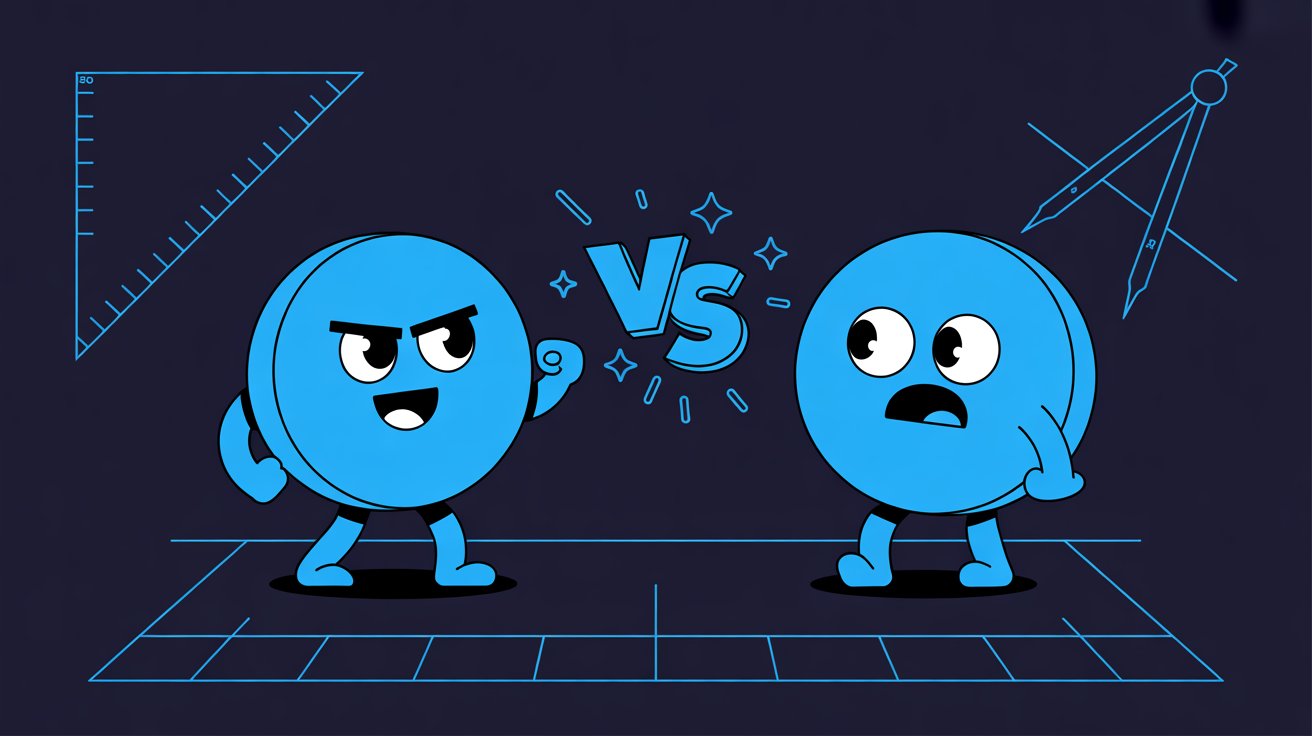
A Funny Drawing Moment (Personal Touch)
I still remember my first try with the circle tool. I was so sure I nailed it until the score flashed “62% Nice try, but that’s an ellipse!” I laughed out loud because it looked perfect to me! But that small “mistake” taught me a big lesson: perception can be tricky.
My tip? Keep your wrist steady and your movement smooth. Think of tracing a calm breath slowly, balanced, and even. After a few tries, I hit 88%, and that felt like winning a geometry game. You can do it too the more you practice, the rounder your circles get!
Real World Wonders: Where Circles and Ellipses Shape Our World
You’ll find both circles and ellipses everywhere once you start looking.
- Circles make up the design backbone of wheels, roundabouts, domes, and even your iris.
- Ellipses, on the other hand, describe planetary orbits, race tracks, and stadium layouts.
According to NASA, nearly all planets move in elliptical orbits, a subtle but vital fact discovered by astronomer Johannes Kepler. This difference makes our universe dynamic and balanced at once.
Did you know? The Earth’s orbit is slightly elliptical meaning we’re sometimes closer to the Sun (perihelion) and sometimes farther (aphelion). Yet to the human eye, it still feels like a perfect circle.
Geometry Meets Fun: Try the Circle Challenge
Now it’s your turn to test your understanding of circle vs ellipse in action! Head to Draw a Perfect Circle Tool and challenge yourself to draw the most flawless circle possible.
- Aim for 90% or higher that’s elite level accuracy!
- Compare your shape to a perfect geometric circle.
- Share your score online with the hashtag #CircleChallenge2025 and see who beats your score.
It’s not just fun, it’s brain training disguised as a game! You’ll sharpen your focus, improve spatial awareness, and understand geometry hands on.
Expert Insight: The Power of Practice
Geometry teacher and digital art coach Mr. Alan Ford says:
“Drawing circles improves more than your art skills. It boosts spatial memory and fine motor control. Tools like Draw a Perfect Circle make geometry exciting again.”
That’s the beauty of combining creativity with math learning. And when you know the difference between a circle and an ellipse, you can appreciate just how precise your eyes and hands can become.
Conclusion: Perfection Is a Fun Pursuit
So, what’s the difference between a circle and an ellipse? The circle is all about perfect balance and symmetry, while the ellipse adds a dynamic, stretched twist to perfection. Both shapes have inspired everything from art to astronomy and now, they can inspire your next circle challenge too.
👉 Try the Draw a Perfect Circle Tool now, test your accuracy, and see how close you can get to geometric perfection. Don’t forget to share your score, maybe you’ll set a new record!
Keep exploring, keep drawing, and remember: even imperfect circles can create perfect learning moments.
FAQs About circle vs ellipse
What is the main difference between a circle and an ellipse?
A circle has one center, while an ellipse has two foci. Every point on a circle is the same distance from its center, but in an ellipse, that distance varies.
Are ellipses just stretched circles?
Yes, in simple terms! An ellipse can be thought of as a stretched or compressed circle, depending on how far apart its foci are.
Why do planets orbit in ellipses and not circles?
According to Kepler’s Laws, gravitational forces make orbits elliptical rather than perfectly circular. This gives planets their unique orbital speeds.
Can I draw an ellipse using the Draw a Perfect Circle Tool?
The tool is designed for circles, but your less perfect tries often look like ellipses, a great way to understand the circle vs ellipse difference visually.
Which shape is harder to draw by hand?
Definitely the circle! Our eyes love symmetry, but our hands rarely cooperate. That’s what makes the Draw a Perfect Circle Challenge so addictive.