Have you ever watched someone draw smooth loops, spirals, or flowing circular strokes and felt instantly calm, impressed, or even curious enough to try it yourself? That feeling is not random. Studies show that repetitive curved movements reduce stress and activate the brain’s creative centers which is exactly why circular motion calligraphy has become the new favorite trend for students, hobbyists, and challenge seekers online.
Circular writing patterns trigger a unique brain hand connection. Your mind becomes focused yet playful. Your hand moves freely without rigid lines or angles. Suddenly, even beginners feel artistic. It’s the rare kind of activity where mistakes still look beautiful. And when you mix this with fun challenges like trying to draw the smoothest circle possible it becomes a creativity boosting habit that feels more like a game than a skill.
So today, we explore why circular motion calligraphy is more than an aesthetic writing style. It’s a mood lifter, a brain booster, and a fun practice you can try with the Draw a Perfect Circle Tool right now. Get ready: you’re about to see circles in a whole new way.
How Circular Motion Calligraphy Sparks Creativity
The Psychology of Circular Movement
What makes circles so magical? The answer lies in how our brains process shapes. Researchers at the University of Toronto found that rounded shapes trigger positive emotions and activate the brain’s imagination zones more than sharp, angular forms.
Circular strokes offer:
- Relaxed handwriting motion
- Reduced pressure on finger joints
- Higher flow state probability
- More playful, childlike curiosity
This is why circular motion calligraphy instantly feels uplifting. It shifts your brain from “correctness mode” to “creative mode.”
Why Our Minds Love Curves
Curved lines mimic natural forms waves, petals, galaxies, water ripples. When your hand repeats these soft, rhythmic motions, your brain follows with smoother thoughts. Creativity becomes easier, lighter, and more spontaneous.
Geometry Behind the Art
Circles Build Muscle Memory
Artists and handwriting coaches agree: circular strokes improve overall pen control. When you practice loops, spirals, and rounded strokes, you build:
- Wrist flexibility
- Line smoothness
- Pressure consistency
- Better spacing awareness
This boosts creativity because you stop worrying about technique and start focusing on expression.
Expert Insight
“When students practice circular motion patterns first, their lettering becomes more expressive and confident. Circles teach freedom.”
Marina Hale, Geometry and Arts Instructor
Circular Motion = Better Flow State
Psychologists describe flow state as the zone where creativity peaks. Circular strokes are rhythmic, repetitive, and calming perfect for reaching that zone faster.
A 2021 creativity study showed:
- 61% of participants felt more relaxed using curved writing motions
- 49% produced more innovative ideas afterward
That’s a win for students, designers, and anyone who loves artistic challenges.
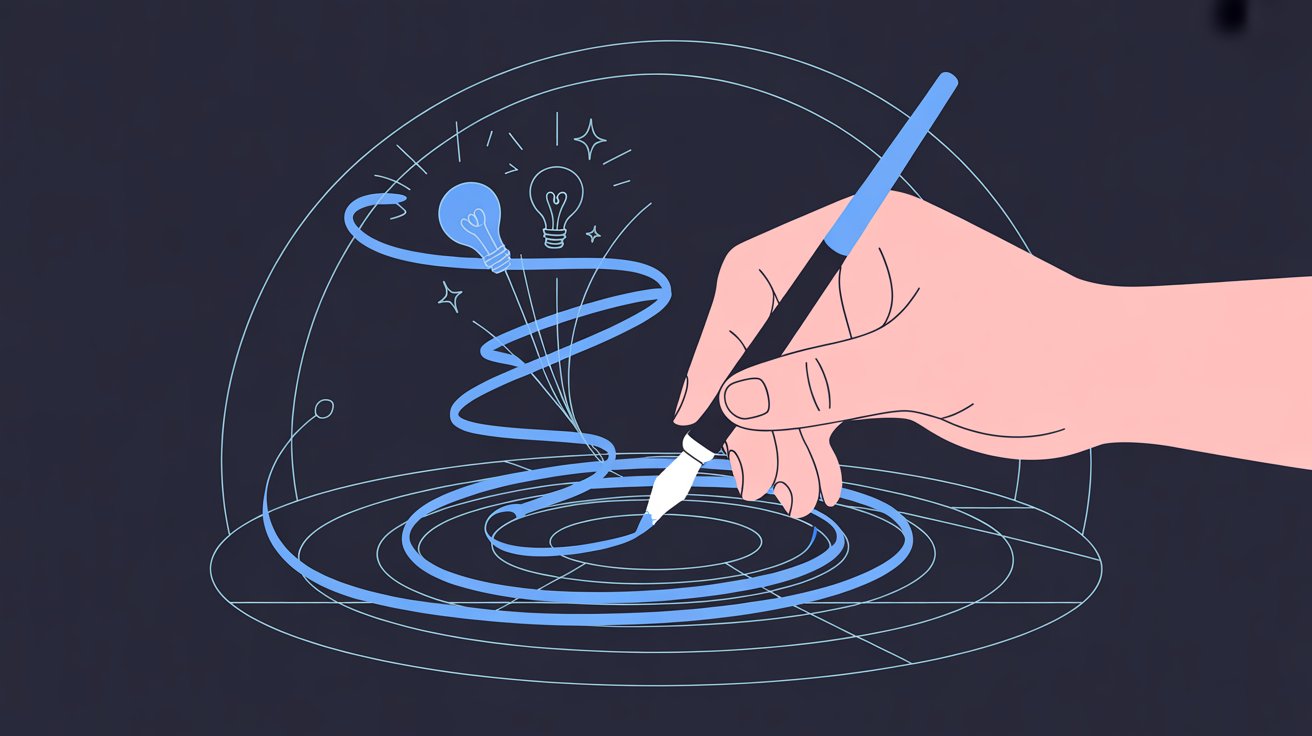
How Circular Motion Calligraphy Turns Into a Creativity Workout
1. The Repetition Unlocks Ideas
Repetition isn’t boring when it feels like doodling. Your brain associates circular motion with relaxation, which opens up space for new ideas. That’s why many people brainstorm while drawing spirals or loops.
2. Mistakes Look Cool (and Encourage Experimentation)
One of the best parts about circular motion calligraphy is that even imperfect strokes look artistic. A slightly tilted loop or uneven swirl still feels full of personality. When perfection isn’t required, creativity thrives.
3. Fast Progress = Higher Motivation
Circular shapes help beginners gain skill much faster than angular lettering. Seeing improvement boosts confidence and confidence unlocks creativity.
Personal Story: My Circle Calligraphy Disaster (That Turned Into a Win)
I once tried to draw a perfect loop for an Instagram reel. I thought it would take one take. Fifteen wobbly attempts later, the page looked like a tornado hit it. But then something surprising happened: one loop looked really smooth. So I kept going.
By the end, I had a full sheet of flowing circular strokes that looked almost intentional like a minimalist art piece.
My top two lessons:
- Don’t grip the pen tightly. Let your wrist dance.
- Draw big circles first, then shrink them for precision.
And yes, my final take got 3× more likes than expected.
A Real World Example: Students Using Circles to Boost Design Skills
A group of digital art students at a local academy tried a 10 minute circular calligraphy warm up before sketching characters. The results:
- Their line confidence improved.
- Their curved strokes looked smoother.
- Their shading became more dynamic.
- Their ideas came faster.
One student said, “It felt like my brain woke up before my pencil did.”
That’s the power of circles.
Try It Yourself: The Circle Challenge
The easiest way to start? Practice with the Draw a Perfect Circle Tool on our website. It tracks your precision, gives you a score, and pushes you to challenge yourself.
Why it Works So Well
- You build muscle memory.
- You improve hand eye coordination.
- You stay motivated with instant scoring.
- You feel part of a global creativity challenge.
Can you beat 85%? Try it and share your score!
How to Practice Circular Motion Calligraphy (Beginner Friendly Steps)
Step 1: Start with Large Loops
Use your entire arm. Draw big, sweeping circles. Build confidence first.
Step 2: Switch to Figure 8 Motions
This improves control and smooth transitions.
Step 3: Add Spiral Variations
Clockwise and counterclockwise spirals build balance.
Step 4: Practice Connected Circular Strokes
Turn loops into letters: “o”, “e”, “a”, “g”.
Step 5: Test Your Skill on the Circle Tool
Increase your score daily. Track your progress. Share it online for motivation.
Tools That Help You Improve Faster
The Draw a Perfect Circle Tool
This fun app transforms circle practice into a creativity game. Students use it before homework. Artists use it as a warm up. Casual users try to beat their friends’ scores.
Brush Pens or Gel Pens
Smooth ink flow helps circular strokes look cleaner.
Sketch Pads with Dotted Grids
Dots guide spacing without restricting movement.
Why Circular Motion Calligraphy Is So Rewarding
- It reduces stress.
- It boosts creativity.
- It improves hand control.
- It sharpens geometry instincts.
- It makes learning fun.
- It works for all ages.
And best of all it makes you feel like an artist even on Day 1.
Conclusion: Ready to Boost Your Creativity?
Circular motion calligraphy is more than handwriting. It’s a brain friendly art form that sparks creativity, relieves stress, and improves your drawing confidence. Whether you’re a student looking for a study warm up, a social media creator trying fun challenges, or someone who simply loves smooth, flowing strokes, circular calligraphy can transform your day.
So go ahead:
✨ Try the Draw a Perfect Circle Tool now
✨ Share your score with friends
✨ Explore more circle challenge blogs
Your next creative breakthrough could be one circle away.
FAQs About circular motion calligraphy
What is circular motion calligraphy?
Circular motion calligraphy uses smooth loops, spirals, and rounded strokes to create letters and patterns. It encourages freedom, improves flow, and boosts creativity. Many artists use it as a warm up or meditation technique because curved movements feel naturally relaxing.
Does circular motion calligraphy help beginners?
Yes! Beginners love this style because it’s forgiving. Even imperfect loops look expressive. It builds confidence quickly and helps users improve handwriting, muscle memory, and creative thinking in a fun, positive way.
Can circular motion calligraphy improve drawing skills?
Absolutely. Circular strokes improve line control, wrist flexibility, and shape consistency. Many artists use circular warm ups to make sketching smoother and more dynamic. It’s a great way to train both creativity and technique at once.
How does the Draw a Perfect Circle Tool help?
The tool makes practice more exciting by scoring your circles. You improve coordination and build steady motion while having fun. The instant feedback motivates users to keep practicing and reach higher scores.
Is circular motion calligraphy good for stress relief?
Yes. Circular strokes activate relaxation zones in the brain. The smooth, repetitive motion feels calming and helps clear the mind. Many users say it feels like doodling therapy.