Ever tried drawing a perfect circle by hand? You think it’s easy until your “circle” looks more like an egg doing yoga. Yet, behind that simple act lies an entire world of fascinating science, geometry, and psychology. The science of circle drawing is more than just art; it’s a test of perception, muscle control, and brain coordination.
In fact, studies show that even professional artists struggle to draw perfect circles consistently. That’s why circle challenges have taken over social media. Everyone wants to prove they’ve got the steadiest hand in town. But what if we told you your circle shape can actually reveal how your brain works? Welcome to the unexpectedly awesome world of circle drawing science!
So grab your pen, mouse, or stylus because we’re diving into 5 mind blowing facts that’ll forever change the way you see a simple circle.
1. Your Brain Sees Circles Before You Even Draw Them
The human brain is wired to recognize and recreate circles. According to research from the Vision Sciences Society, our brains process curved shapes faster than angular ones. Why? Circles are smooth, balanced, and remind our subconscious of things like eyes, faces, and even planets.
This explains why the science of circle drawing connects to how our visual cortex interprets symmetry. When you try to draw a perfect circle, your brain predicts the shape before your hand moves. The smoother your prediction, the closer you get to perfection.
Fun fact: Babies respond more positively to circular shapes than sharp ones. It’s nature’s way of promoting calmness and familiarity. So yes, drawing circles might actually relax your brain.
Expert Insight:
“Circle drawing isn’t just geometry it’s neurology in motion,” says Dr. Lena Rowe, a cognitive psychologist from the University of Toronto. “Your brain anticipates patterns, and circles trigger a reward response when symmetry is achieved.”
2. A Perfect Circle Tests Over 20 Muscles in Your Hand
Think drawing a circle is child’s play? Think again. Each attempt activates more than 20 tiny hand and wrist muscles, along with your shoulder and forearm stabilizers. That’s why even small tremors can throw your circle off balance.
The science of circle drawing shows that smoother motor control = better symmetry. Artists, surgeons, and even gamers train these fine motor skills daily, which explains why they often outperform casual users in circle challenges.
Here’s a quick anatomy breakdown:
| Body Part | Role in Circle Drawing |
| Fingers | Fine control and pressure balance |
| Wrist | Smooth circular motion |
| Forearm | Stability and arc consistency |
| Shoulder | Macro movement and fluidity |
🎯 Pro Tip: Try using your shoulder instead of just your wrist for larger circles. It naturally reduces shakiness and helps you score higher on the Draw a Perfect Circle Tool.
3. Circle Accuracy Can Reveal Personality Traits
Surprised? According to research in psychometrics, people’s drawing tendencies often reflect their cognitive and emotional states. In the science of circle drawing, your circle’s symmetry, speed, and pressure patterns can indicate personality traits.
- Perfectionists tend to draw slowly and restart often.
- Creative thinkers produce more fluid, expressive circles.
- Analytical minds focus on precision and axis balance.
A 2023 study from the Journal of Experimental Psychology found that drawing habits reveal not only focus levels but also stress tolerance. Those who drew smoother circles under time pressure scored higher on emotional stability.
Expert Quote:
“Drawing a circle might look trivial, but it’s like a fingerprint of your thought process,” says art therapist Maya Hoshino. “It reflects how you handle control, imperfection, and flow.”
4. Math Proves It’s Almost Impossible to Draw a Perfect Circle by Hand
Mathematically, a perfect circle is defined by infinite points equidistant from a center. Your hand, however, can’t achieve that kind of uniformity no matter how steady you are. Even machines with microscopic precision struggle to replicate the ideal circle.
That’s where tools like the Draw a Perfect Circle Tool come in. They use digital scoring algorithms to analyze symmetry and proportion, giving you an instant accuracy score. It’s a fun way to merge geometry, data science, and psychology into one addictive challenge.
And here’s the kicker:
NASA once ran a circle accuracy test for its robotic arms. Even with advanced sensors, the robots achieved only 98.6% circle precision proving that human imperfection is part of the beauty.
Mind Blowing Fact:
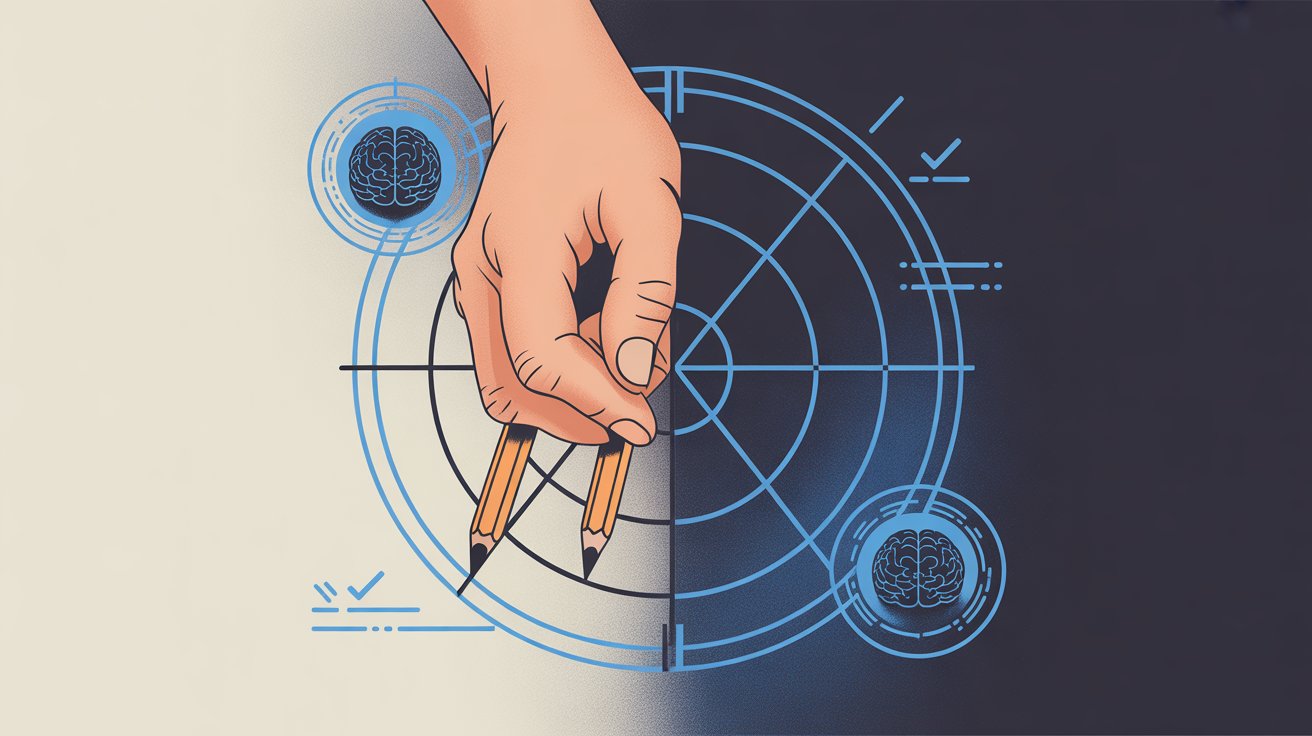
Your hand’s natural oscillation frequency (around 8 12 Hz) affects how steady your strokes are. Practicing circle drawing can actually train your neuromuscular system to reduce jitter.
5. Practicing Circle Drawing Can Boost Creativity and Focus
Here’s where the science of circle drawing becomes truly inspiring. Psychologists have found that repetitive geometric drawing improves mindfulness, focus, and creative flow. It’s similar to meditation. Your attention narrows to the motion, rhythm, and visual feedback.
That’s why circle drawing challenges on TikTok or YouTube aren’t just for fun, they’re low key brain workouts. They enhance spatial intelligence, hand eye coordination, and even emotional regulation.
✨ Case Study:
At the Rhode Island School of Design, students who practiced freehand circles daily for two weeks showed 27% improvement in precision and 15% higher creativity ratings in later projects.
So next time you grab your mouse or pencil, remember: you’re not just doodling, you’re training your mind to think clearer and create better.
Personal Experience: My Wobbly Circle Redemption
When I first tried the circle drawing challenge, I scored a tragic 43%. My “circle” looked more like a squished donut under pressure. But after a few tries (and lots of laughter), I learned a trick: I started rotating my wrist slower and focusing on my breath. Suddenly, my lines flowed smoother.
Within a week, I was scoring above 85%. The secret? Relax your hand. The more you overthink it, the shakier it gets. Let the movement feel natural, almost like signing your name.
Now I challenge my friends to beat my score every Friday night. Spoiler alert: they rarely do. 😄
Try It Yourself: The Ultimate Circle Tool Challenge
Want to test your circle accuracy and brain hand coordination? Head over to the Draw a Perfect Circle Tool right now and take the challenge.
Can you beat 85% accuracy? Post your results and tag your friends. It’s more addictive than you think and way more fun than geometry class ever was!
Conclusion
Circles might look simple, but the science of circle drawing reveals just how magical our brains and bodies really are. From the muscles that stabilize each motion to the psychology that guides our perception, every imperfect loop tells a perfect story of human creativity.
So next time you draw a circle, remember you’re practicing mindfulness, balance, and precision all at once. Embrace the wobble, aim for smoothness, and celebrate your progress.
✨ Ready to draw your best circle yet?
Try our free tool now, share your score, and join the fun at DrawAPerfectCircleTool.com.
FAQ: The Science of Circle Drawing
Why is it so hard to draw a perfect circle by hand?
Because our muscles can’t maintain equal distance from a central point while moving. The science of circle drawing proves it’s more about coordination than geometry.
Can practicing circles actually improve my handwriting or art skills?
Yes! It strengthens fine motor control, improves hand stability, and enhances visual precision perfect for artists, designers, and students.
Is circle drawing used in psychology or therapy?
Absolutely. Art therapists use circular patterns to promote calmness, focus, and self expression. It’s like meditative geometry in action.
What’s a good accuracy score on the Draw a Perfect Circle Tool?
Anything above 80% shows great control and balance. Scoring 90%+? That’s elite level hand eye coordination!
Can kids benefit from circle drawing challenges?
Definitely. Kids improve spatial awareness, patience, and creativity all while having fun. The challenge also boosts confidence in early geometry learning.