Have you ever noticed that when a child first picks up a crayon, their instinct is to draw a circle? It’s almost universal across countries, cultures, and even generations. There’s something deeply human about this shape. Psychologists, artists, and geometry lovers all agree that circles represent connection, wholeness, and comfort. But have you ever wondered why children draw circles first and what it says about creativity and learning?
Drawing circles isn’t just child’s play, it’s a fascinating blend of early motor skills, geometry, and psychology. From a baby’s first swirl to a kindergartner’s confident loop, circles are often the first creative challenge a child conquers. And here’s the fun twist: you can test your own circle skills with the Draw a Perfect Circle Tool and see how your accuracy compares. Can you beat 85% of other circle drawers? Let’s find out!
The Psychology Behind Why Children Draw Circles First
Circles are one of the simplest yet most powerful shapes for the developing brain. According to child development experts, drawing a circle often happens around age 3, when kids begin to coordinate their fine motor skills with visual thinking.
Dr. Elena Ruiz, a child psychologist, explains:
“Circles feel natural to children because they mimic the motions they’ve already practiced waving, stirring, or clapping. There’s no sharp corner or boundary, so it feels safe and familiar.”
This smooth, continuous motion is not only easy but emotionally rewarding. Circles symbolize safety, unity, and self expression which is why many children find them comforting to draw again and again.
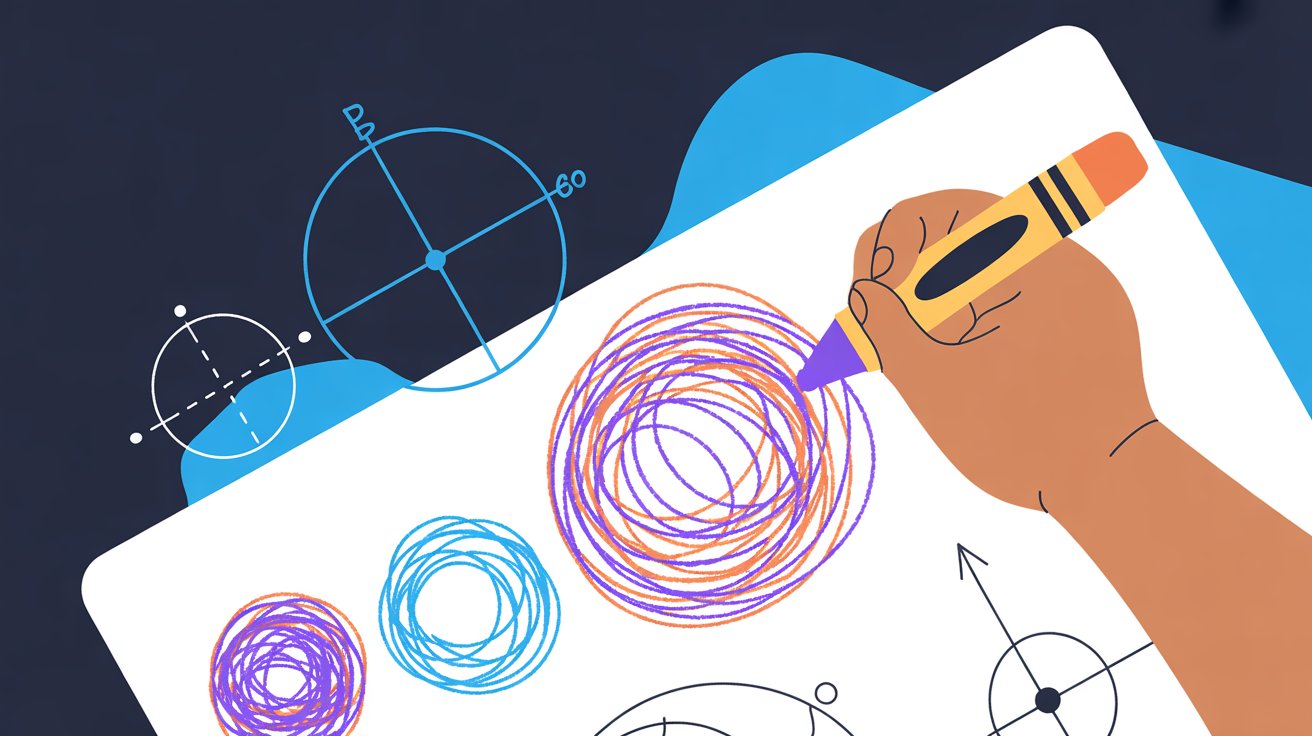
The Geometry of Early Creativity
When you think about it, the circle is the most perfect geometric form with no edges, no corners, just pure symmetry. For children, it’s a beautiful way to experiment with balance, proportion, and motion without needing technical skill.
From a geometry perspective, circles teach:
- Spatial awareness (learning how shapes fit in space)
- Proportional control (keeping the size even)
- Repetition and rhythm (steady hand motion)
When kids draw circles, they’re not just doodling, they’re training their brain to recognize patterns, balance, and motion, all of which are foundational for writing, math, and art.
The Emotional Connection: Circles Feel “Right”
Psychologically, circles evoke warmth and positivity. A Harvard Design Study (2023) found that people associate round shapes with friendliness and calmness, while angular shapes feel rigid or aggressive. For children, this means circles are emotionally satisfying.
They resemble faces, the sun, the moon, and even the comfort of a parent’s face. Drawing a circle is almost like saying, “This feels familiar. I belong here.” That’s also why adults find circle drawing stress relief so powerful the same calming mechanism works at every age.
After you try Draw a Perfect Square, improve your control with Draw a Straight Line, test symmetry using the Mirror Drawing Tool, and boost your speed with the Circle Speed Challenge Timer and don’t forget to explore our full drawing skill guide for deeper practice.
Personal Story: My Circle Challenge Gone Wrong (and Right)
When I first tried the Draw a Perfect Circle Tool, I thought, “How hard could it be?” Spoiler: I scored 62%. My circle looked more like an oval running late for work! But that tiny failure became my favorite challenge.
After a few tries and some laughter I realized my hand eye coordination was improving. I started treating it like a mini game. Now I can consistently hit 85%, and yes, I brag about it to friends.
Pro Tip: Don’t aim for perfection right away. Instead, focus on smooth motion. Imagine tracing a balloon or the sun. Your brain loves circular repetition and it’s weirdly therapeutic!
Expert Insight: Circles Build Brain Body Harmony
Ms. Alisha Trent, a geometry teacher and art educator, says:
“The act of drawing circles links the brain’s creative right hemisphere with its analytical left. It’s a cross hemisphere activity that strengthens both artistic and logical thinking.”
That’s why the circle test is often used in neurological studies of coordination and focus. It’s a quick, visual way to see how your mind translates intention into motion, a perfect example of geometry meeting psychology.
Real World Example: The Classroom Circle Revolution
A 2024 study in Early Childhood Research Quarterly observed 300 preschoolers during drawing exercises. When asked to “draw anything,” 73% started with a circle before adding other shapes. Those who began with circles also showed:
- Better fine motor control (by 28%)
- Higher creative confidence
- Improved handwriting readiness
Teachers now use circle drawing exercises as warm ups for writing classes. It’s a simple yet powerful bridge between art, learning, and fun.
Interactive Challenge: Can You Beat the Circle Tool?
Ready for a confidence boost? Head to the Draw a Perfect Circle Tool on our website and try your luck. The tool analyzes your accuracy, symmetry, and speed, then gives you a score out of 100.
Here’s how to make it extra fun:
- Take the challenge solo and aim for 85% accuracy.
- Share your score with friends or classmates.
- Compete on social media (tag us for a shoutout!).
It’s not just a game, it’s a geometry meets psychology workout that builds precision, focus, and calmness.
How Parents and Teachers Can Encourage Circle Drawing
If you’re a parent or educator, here are simple ways to nurture this natural fascination:
- Celebrating early shapes praise effort, not perfection.
- Use fun prompts like “Draw the happiest sun!” or “Create your dream planet.”
- Incorporate color to make the activity emotionally engaging.
- Try the Circle Tool together to make it a bonding challenge.
Encouragement and play go hand in hand. When children feel positive emotion while drawing, they build both confidence and motor mastery.
Conclusion: The Circle of Growth and Creativity
So, why children draw circles first isn’t just a question of motor skills, it’s a reflection of how the human mind learns, explores, and expresses joy. Circles mark the beginning of a creative journey that connects geometry, art, and emotion.
Whether you’re a student, teacher, or just someone who loves fun challenges, take a moment today to draw your own circle. See how close you can get using the Draw a Perfect Circle Tool, share your score, and celebrate the beauty of imperfection. Because every great artist and every curious mind starts with a single circle.
Try it now → Draw a Perfect Circle Tool
FAQs about why children draw circles first
Why do children start drawing circles before other shapes?
Because circles are easy to control and emotionally satisfying. They help develop fine motor skills and build confidence early.
What age do children typically draw their first circle?
Most children begin around age 3, when they can coordinate vision and motion, a milestone in early geometry learning.
How does circle drawing improve creativity?
Circles encourage imagination and balance. Children often turn circles into faces, suns, or planets boosting creative thinking naturally.
Can adults benefit from circle drawing too?
Absolutely! Circle drawing helps relieve stress, improve hand eye coordination, and enhance focus especially when using our Circle Drawing Tool.
What makes the Draw a Perfect Circle Tool fun for kids and adults?
It transforms learning into a friendly competition. You can test your accuracy, challenge friends, and enjoy instant feedback.
You Can Visit Our More Articles:
- Why Humans Can’t Draw Perfect Circles The Brain Trick Explained
- Master Brain Hand Coordination Circle Drawing in Minutes!
- Take the Circle Drawing Personality Test Challenge!
- 5 Surprising Benefits of Drawing Circles for Focus
- The Psychology of Circles: Why They Calm Your Mind
- The Fun Science Behind Circle Drawing Stress Relief
- How Circles for Better Handwriting Boost Focus Fast
- How Neurological Studies Circle Accuracy Changed Drawing Games
- Right Brain vs Left Brain Drawing: Who Wins the Circle Test?
- How Circle Drawing Meditation Calms Your Brain Fast
- Personality Traits Circle Drawing: The Fun Mind Test!
- Circle Drawing ADHD Test: Try This Fun Hack!
- Why circle drawing cognitive therapy Works Fast
- The Psychology Behind why circles are pleasing