Ever tried to draw a perfect circle and ended up with something that looks more like a lopsided potato? You’re not alone! But here’s a twist centuries before online “draw a perfect circle” challenges went viral, artists and mathematicians were already obsessed with perfection. And nowhere is this obsession more beautifully captured than in circles in Islamic art.
These circles aren’t just shapes, they’re symbols of unity, balance, and divine harmony. They appear in mesmerizing mosaics, mosque domes, and geometric tiles that seem to go on forever. But why do these circles feel so perfect? And what can we learn from them about creativity, focus, and even mental clarity? Let’s dive into the geometry, psychology, and fun behind these flawless forms and yes, you’ll even get a chance to test your circle skills later!
The Geometry of Perfection: Why Circles Matter
In Islamic art, geometry is more than math; it’s a visual language of spirituality. Artists used symmetry, repetition, and proportion to create designs that reflect the infinite nature of creation. Among all geometric forms, the circle stands out as the most balanced and complete shape.
The circle’s center represents the starting point of unity, creation, or the divine source while its radius symbolizes connection to all that exists. Every line drawn from that center stays equal, showing perfect balance. No beginning, no end, just eternal flow.
Fun fact: Early Islamic architects used circle geometry formulas to design mosques and gardens that align perfectly with natural proportions. The result? Visually soothing, mathematically precise beauty that still leaves people in awe today.
The Psychology Behind Circular Beauty
Ever noticed how circles make you feel calm or focused? Psychologists suggest that humans are hardwired to find circles comforting. Unlike sharp angles, circles signal safety and wholeness. That’s one reason circles in Islamic art feel peaceful, almost meditative.
According to Dr. Layla Rahman, a cognitive psychologist specializing in art perception:
“The human brain naturally seeks symmetry and flow. Circular designs in Islamic art trigger relaxation and awe; they remind us of natural patterns like the sun, the moon, and ripples in water.”
That explains why many people describe the experience of looking at circular art as spiritual or healing. It’s not just aesthetic, it’s emotional geometry.
Start with Draw a Perfect Square, level up using Draw a Straight Line, refine precision on the Mirror Drawing Tool, and push limits with the Circle Speed Challenge Timer then visit our advanced accuracy tips post to grow even faster.
How Artists Achieved Perfect Circles Without Tools
Long before digital design tools, Islamic artists relied on hand drawn geometry and simple instruments like compasses and strings. Yet, the precision they achieved is astonishing. The secret? Practice, mindfulness, and rhythm.
A famous 15th century calligrapher once said that drawing perfect circles required “steady breath, calm hand, and patient heart.” Today, those principles still hold true whether you’re sketching on paper or using a digital circle drawing tool.
If you want to experience their precision firsthand, try this:
👉 Open the Draw a Perfect Circle Tool on our site and see how close you can get to 100%! The tool scores your accuracy instantly. Most people land around 70 80%. Can you beat 85%?
Personal Circle Challenge Story
I still remember my first attempt at drawing a perfect circle online. I was confident until my score popped up: 61% accuracy! My “circle” looked more like an egg doing yoga. But after a few tries, I realized something magical: the more relaxed I was, the smoother my lines became.
It’s funny how this simple game mirrors life and art. Just like circles in Islamic art, precision isn’t just about control it’s about balance and flow. Once I stopped rushing and focused on the rhythm of my hand, my score soared to 89%. That tiny victory taught me a big lesson: perfection often begins with patience.
The Mathematical Beauty of Circles
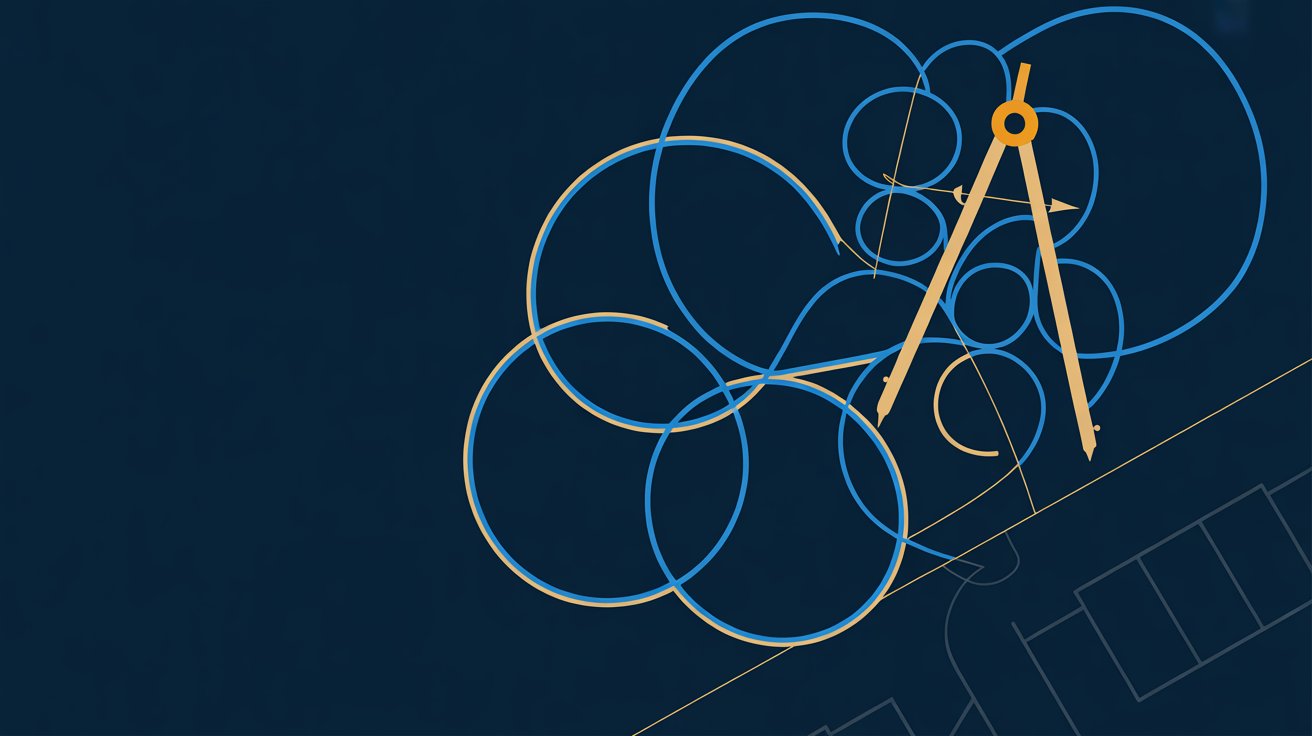
Islamic artists mastered what we now call sacred geometry combining art, math, and spirituality. Circles were the foundation of every complex pattern, often interlocked to form stars, flowers, and tessellations.
Here’s how geometry shaped Islamic art masterpieces:
| Shape | Symbolic Meaning | Common Use |
| Circle | Unity & Infinity | Domes, ceilings |
| Hexagon | Harmony | Tiles, carvings |
| Star pattern | Perfection | Mosque floors |
| Interlocking circles | Connection | Mosaics |
Even without digital accuracy, these artists achieved near perfect proportions. Their secret was constructive geometry starting with one circle and expanding outward, layer by layer, using intersecting arcs. It’s a method you can still try using the Draw a Perfect Circle Tool to visualize symmetry in action.
E E A T Add On: Expert Insight
Geometry teacher Ahmed Malik explains:
“When students study circles in Islamic art, they’re not just learning design, they’re understanding mathematical harmony and mindfulness. It’s one of the best ways to combine art and science.”
A study by the British Museum found that over 80% of traditional Islamic patterns are circle based. This shows how essential the circle is not just as decoration but as a framework for infinite creativity.
Why Circles Feel Spiritually Perfect
The spiritual side of circles in Islamic art goes deeper than aesthetics. Circles symbolize Tawhid, the oneness of God. Every design radiates from a center, just as life radiates from a single divine source. The patterns don’t end, they expand infinitely, showing how creation is continuous.
This symbolic perfection explains why Islamic art avoids depicting living forms and instead focuses on geometric abstraction. Circles become a form of visual prayer, reflecting peace, unity, and endless creation.
Try It Yourself: The Circle Perfection Challenge!
Now that you know the meaning behind perfection, it’s your turn! Head to our Draw a Perfect Circle Tool and take the challenge. Try to get as close as you can to 100%. Then share your score with friends who can draw the most perfect circle?
You’ll be surprised how addictive it becomes. Each attempt helps you improve hand eye coordination, focus, and creative flow. Who knew geometry could be this much fun?
💡 Pro Tip: Try drawing with your non dominant hand it’s a true test of balance and patience!
Conclusion
From spiritual symbolism to geometric precision, circles in Islamic art prove that perfection isn’t just about flawless lines it’s about harmony, rhythm, and intent. Every circle tells a story of balance and endless creation, echoing nature and the cosmos.
Want to feel that same flow? Try the Draw a Perfect Circle Tool now and see how close you can get to perfection. Challenge your friends, improve your focus, and unlock your inner artist.
Because when you find balance even in a simple circle you’re already touching perfection.
FAQs About circles in islamic art
Why are circles important in Islamic art?
Circles represent unity, infinity, and the divine source in Islamic art. They’re used to create geometric designs that reflect spiritual harmony and balance.
How did artists create perfect circles without modern tools?
Islamic artists used compasses, strings, and geometric methods. With patience and rhythm, they achieved precise patterns that still inspire modern designers.
What can I learn from circles in Islamic art?
You can learn about geometry, mindfulness, and creative balance. Each circle teaches patience and precision qualities that improve focus in art and life.
Can I practice drawing perfect circles online?
Yes! Use the Draw a Perfect Circle Tool to test your accuracy score. It’s a fun, interactive way to improve hand control and creative precision.
Why do circles make people feel calm?
Psychologically, circles symbolize wholeness and safety. That’s why circular designs in Islamic art create feelings of peace and relaxation.
You Can Visit Our More Articles:
-
- The Geometry of a Perfect Circle: Can You Master It?
- What the Ancient Greek Circle Study Can Teach You
- Why Circles in Mathematics Are So Addictive
- 5 Fun Facts About the Perfect Shape in Geometry Circle
- Pi and Circle Connection Explained in 30 Seconds!
- The Hidden Geometry Behind Circles in Nature
- Circle Symmetry in Design: The Secret to Perfect Art
- 5 Mind Blowing Facts About the Golden Ratio and Circles
- The Hidden Minds: Mathematicians Who Studied Circles
- Teaching Geometry with Circles: A Creative Twist
- Why Circles in Engineering and Architecture Rule Design
- Circle vs Ellipse Showdown: Who Wins the Shape Game?
- How Circles in Astronomy Shape Our Universe
- Why Circles in Logos and Branding Capture Attention Fast
- How to Draw a Straight Line Without a Ruler Challenge!
- The Easiest Way to Draw a Straight Line by Hand No Tools Needed!
- Test Your Freehand Accuracy Online Can You Win?
- Circle Geometry Formulas Made Easy and Fun
- Master Geometry Fast with the Circle of Apollonius
- Can You Spot the Real Life Perfect Circles Challenge?
- Can You Perfectly Draw Circles Without Tools?